
A fragrance is far more than a simple aroma; it acts as an invisible accessory, a whisper of your essence that lingers in the hearts of those you encounter. It can convey confidence, warmth, sophistication, or even mystery, often long before you speak a word. With hundreds of options available, the journey to discover the secret to choosing your unique fragrance can seem complex.
Selecting the right scent goes beyond merely liking how a perfume smells at first sniff. It involves understanding how different compositions interact with your individual body chemistry, how they reflect your personality, and how they enhance the mood you wish to create. We believe that finding your signature scent is an intimate and personal experience, one that should elevate your style and leave a truly lasting impression.
This comprehensive guide will help you navigate the intricate world of perfumery, offering insights and practical advice to empower your choice. We aim to equip you with the knowledge needed to select a fragrance that truly resonates with your individual essence, ensuring every spray is a step closer to expressing your authentic self.
The power of a signature scent
The concept of a signature scent is deeply personal and incredibly potent. It is an olfactory fingerprint, a unique aroma that becomes synonymous with who you are. Much like a carefully chosen outfit or a particular style of decor, your fragrance communicates volumes about your character and presence without uttering a single word.
Think of a fragrance as an emotional anchor. Certain scents have the remarkable ability to evoke vivid memories, transporting us back to specific moments, people, or places. When you wear a signature scent, you are not only defining your present self but also contributing to the memories you create for others. It is an invisible thread connecting you to the experiences and individuals in your life, leaving a beautiful, lasting impression long after you have left a room.
A well-chosen perfume can significantly boost your confidence. When you feel good about how you smell, it reflects in your demeanor, posture, and interactions. This subtle enhancement can influence your mood, elevate your spirits, and even improve your focus throughout the day. It is an investment in your personal well-being, an act of self-care that pays dividends in how you present yourself to the world.
Understanding fragrance families and notes
To truly appreciate and choose a fragrance, it helps to understand its fundamental building blocks: fragrance families and notes. These elements combine to create the complex tapestry of an aroma, dictating its character and how it evolves on your skin.
Exploring the main fragrance families
Fragrances are broadly categorized into families, each offering a distinct olfactive experience. Familiarizing yourself with these categories can narrow down your search considerably:
- Floral: Often the most popular family, encompassing scents from single flowers (soliflores) to vibrant bouquets. They can be light and airy or rich and heady, evoking feelings of romance and femininity.
- Oriental: Known for their warmth and sensuality, oriental fragrances often feature exotic spices, resins like amber, vanilla, and opulent flowers. They tend to be long-lasting and make a powerful statement.
- Woody: Grounded and sophisticated, woody scents are built around notes of sandalwood, cedarwood, vetiver, and patchouli. They can be dry and smoky or creamy and warm, appealing to those who prefer earthy and elegant aromas.
- Fresh: This broad category includes citrus (lemon, bergamot), green (cut grass, leaves), and aquatic (sea breeze, fresh rain) notes. Fresh fragrances are typically light, invigorating, and perfect for daytime wear or warmer climates.
- Fougère: A classic masculine family, fougère (French for “fern”) fragrances are characterized by notes of lavender, coumarin (tonka bean), and oakmoss, often with geranium and bergamot. They are fresh, herbaceous, and subtly woody.
- Chypre: Sophisticated and complex, chypre fragrances feature a distinctive accord of bergamot, oakmoss, and labdanum, often with floral or fruity nuances. They are elegant, warm, and long-lasting.
The journey of fragrance notes
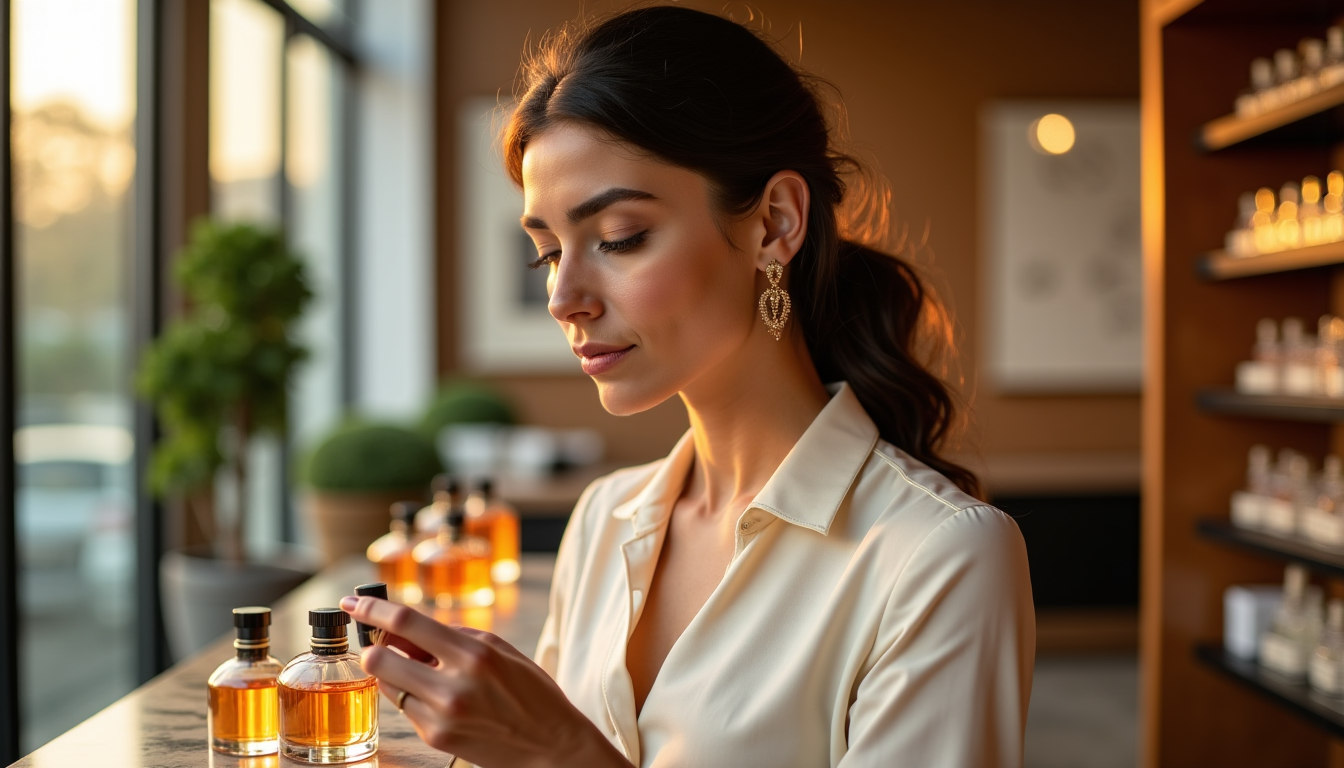
Every fragrance tells a story through its notes, which unfold in three distinct stages, much like a musical composition:
- Top notes: These are the initial aromas you smell immediately after applying a fragrance. They are typically light, fresh, and volatile, designed to make the first impression. Common top notes include citrus, light fruits, and herbs. They usually fade within 15 minutes.
- Middle notes (heart notes): As the top notes dissipate, the middle notes emerge, forming the “heart” of the fragrance. These are often floral, spicy, or green notes, providing balance and depth. They can last for several hours and are crucial to the overall character of the scent.
- Base notes: These are the foundation of the fragrance, appearing as the middle notes fade. Base notes are rich, heavy, and long-lasting, providing depth, warmth, and longevity to the scent. Common base notes include woods, resins, musk, and vanilla. They can linger on the skin for many hours, sometimes even days.
Understanding this progression helps you evaluate a fragrance beyond its initial appeal. A scent you initially adore might not be as captivating once its heart or base notes develop, and vice-versa. Patience is key when testing.
The alchemy of skin chemistry
Have you ever noticed how a fragrance smells divine on a friend but seems entirely different, or even less appealing, on your own skin? This phenomenon is not your imagination; it is the fascinating result of individual skin chemistry, a unique interaction that transforms how a perfume develops and projects.
Your skin is a living canvas, and its unique composition acts as an invisible ingredient in every fragrance you wear. Factors such as pH levels, oiliness, body temperature, diet, and even hormonal fluctuations can subtly alter the way scent molecules interact with your skin. For example, oilier skin types tend to hold fragrances longer and can intensify certain notes, making them project more strongly. Drier skin, on the other hand, might cause a fragrance to dissipate more quickly, requiring more frequent application or a higher concentration.
Consider how different climates and environments also influence this interaction. A fragrance that feels light and refreshing in a cool environment might become heavy and cloying in hot, humid conditions. This personalized chemical reaction means that the “perfect” scent is not universal; it is a harmonious blend of the fragrance itself and your unique biological makeup. This is why testing a fragrance directly on your skin, rather than just on a blotter, is an absolutely essential step in your selection process.
Matching scent to occasion and mood
Just as you select different outfits for varying occasions, your fragrance wardrobe can be tailored to complement specific events, moods, and even seasons. A single signature scent is wonderful, but having a small collection allows for greater versatility and expression.
Building a versatile fragrance wardrobe
The right scent can enhance the atmosphere of any moment, from a casual afternoon to a formal evening. We often recommend considering a few distinct categories:
- Everyday elegance: For daily wear, opt for lighter, less intrusive scents. Fresh, clean, or subtly floral and woody fragrances are often ideal for the office or casual outings. They provide a pleasant aroma without overwhelming those around you.
- Romantic evenings: When the occasion calls for something more intimate and captivating, deeper, more opulent scents come into their own. Oriental, rich floral, or warm gourmand notes can create an alluring and memorable aura.
- Special events: For celebrations or formal gatherings, you might choose a more sophisticated and distinctive fragrance. These could be complex chypre or intense woody compositions that leave a lasting, elegant impression.
- Seasonal selections: The time of year also plays a role. Lighter, brighter, and more aquatic scents are refreshing in spring and summer, while warmer, spicier, and richer fragrances provide comfort and depth during autumn and winter.
Understanding how to pair your fragrance with the moment ensures you always leave a lasting impression. For additional insights on cultivating a collection that truly reflects your individual taste and lifestyle, we encourage you to explore resources that help you Find your signature scent, guiding you through the nuances of personal preference and olfactive discovery.
Navigating the world of concentrations
Beyond the actual scent, understanding fragrance concentrations is crucial for choosing a perfume that meets your expectations for longevity and intensity. The concentration refers to the percentage of pure fragrance oil dissolved in alcohol and water, directly impacting how long a scent lasts and how strongly it projects.
The differences between these concentrations are significant, affecting both the price point and the overall experience of wearing the fragrance. A higher concentration typically means a more potent and enduring scent, but also often a higher cost. Here is a breakdown of the most common types:
| Concentration type | Fragrance oil percentage | Typical longevity | Sillage (projection) |
|---|---|---|---|
| Eau de Cologne (EDC) | 2-4% | 1-2 hours | Very light |
| Eau de Toilette (EDT) | 5-15% | 3-5 hours | Moderate |
| Eau de Parfum (EDP) | 15-20% | 5-8 hours | Strong |
| Extrait de Parfum / Pure Perfume | 20-40% | 8+ hours | Very strong |
Eau de Cologne (EDC): This is the lightest form of fragrance, primarily composed of citrus oils. It is refreshing and often used for a quick burst of scent, ideal for hot weather or after a shower. Its minimal oil content means it fades quickly.
Eau de Toilette (EDT): A popular choice for everyday wear, EDT offers a good balance of longevity and freshness. It is generally suitable for office environments or casual outings, providing a noticeable but not overpowering presence.
Eau de Parfum (EDP): This concentration is one of the most common and versatile. EDPs offer a richer, longer-lasting aroma than EDTs, making them suitable for most occasions, from daytime to evening. They often have a stronger sillage, meaning the scent projects further from the wearer.
Extrait de Parfum (Pure Perfume): The most concentrated and often the most expensive form, Extrait de Parfum provides the longest wear and the most intense scent experience. A small amount is usually sufficient, and it tends to stay closer to the skin, creating an intimate aura.
Choosing the right concentration depends on your personal preference, the context in which you plan to wear the fragrance, and how long you want it to last. Experimenting with different concentrations of a scent you love can reveal new facets of its character.
Practical tips for an informed choice
Embarking on the quest for your unique fragrance can be an exciting journey, but it requires a thoughtful approach. With countless bottles vying for your attention, a strategic method will help you make a truly informed decision.
Mastering the art of fragrance testing
Testing fragrances effectively is paramount to finding your perfect match. We recommend following these steps:
- Start with blotters, but finish on skin: Use scent strips to get a preliminary idea of a fragrance. This helps you quickly eliminate scents you dislike. Once you find a few contenders, always test them on your skin.
- Apply to pulse points: Spray the fragrance on areas where your blood vessels are close to the surface, such as your wrists, inner elbows, or neck. The warmth of these areas helps the fragrance develop and project naturally.
- Allow time for development: Remember the three stages of fragrance notes. Do not make a decision based on the top notes alone. Wear the fragrance for several hours, ideally a full day, to experience its heart and base notes.
- Limit your tests: Your nose can become fatigued easily. Try to test no more than two or three fragrances at a time on your skin, ideally on different limbs, to avoid olfactory confusion.
- Take a break: If you are testing multiple scents in a store, step outside for a few minutes or smell coffee beans (if available) to reset your olfactory senses.
- Consider samples: Many retailers offer small samples or decants. This allows you to live with a fragrance for a few days, experiencing it in various settings and moods before committing to a full bottle.
Patience and observation are your best allies in this process. A fragrance is an investment, both financially and personally, so rushing the decision can lead to regret.
“Perfume is more than a finishing touch — it’s a personal signature. The right fragrance can say as much about you as your wardrobe or the way you decorate your home.”
This sentiment underscores the profound connection between scent and identity. It is a reflection of your inner world, projected outward in an exquisite, ethereal form.
Crafting your unique fragrance narrative
The journey to finding your unique fragrance is a delightful exploration of self, preferences, and the intricate world of perfumery. It is not merely about selecting a pleasant smell, but about discovering an invisible accessory that truly resonates with your essence and enhances your personal narrative.
We have explored the profound impact a signature scent can have, acting as an emotional anchor and a boost to confidence. We delved into the structure of fragrances, understanding how families and notes intertwine to create complex aromas, and how your individual skin chemistry plays a pivotal role in their development. We also discussed the importance of tailoring your scent to the occasion and the practicalities of choosing the right concentration for your needs.
Armed with this knowledge, you are now well-equipped to navigate the myriad options available. Remember to approach the process with curiosity and patience, allowing each fragrance to tell its full story on your skin. Your unique scent is waiting to be discovered, ready to become a memorable part of who you are and how you are perceived. Embrace the art of selection, and let your chosen fragrance speak volumes about your individuality.